CPBL at PyCon Darmstadt
Published at Apr 14, 2026
Author: Marvin van Aalst
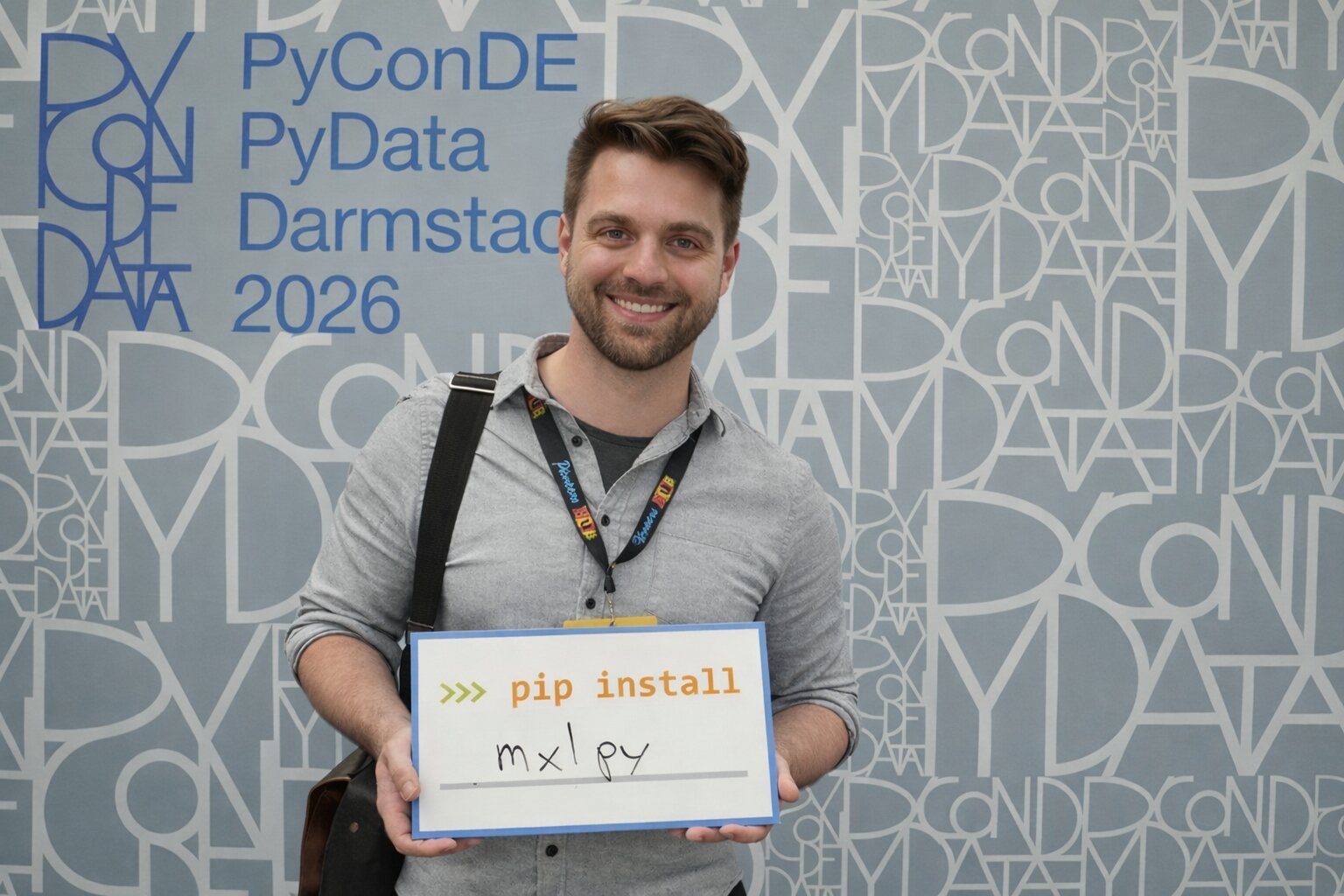
At this year’s PyCon DE & PyData 2026 in Darmstadt, researchers, developers, and industry practitioners have gathered to explore the rapidly evolving frontiers of Python, artificial intelligence, and data science. Among the participants is Dr. Marvin van Aalst, who is contributing to discussions on integrating AI techniques with mechanistic modeling—an interdisciplinary approach that is reshaping scientific inquiry.
Dr. van Aalst’s participation reflects a growing interest in combining data-driven AI models with physics- and biology-based mechanistic frameworks. This hybrid methodology aims to improve interpretability, robustness, and predictive accuracy in complex systems, particularly in domains where purely data-driven models fall short.
A central theme of the conference is the value of community. Events like PyCon DE & PyData provide a high-density environment for exchanging ideas, challenging assumptions, and identifying new collaboration opportunities. For researchers such as Dr. van Aalst, engaging directly with a passionate and technically diverse community enables rapid feedback cycles and exposure to perspectives that are difficult to replicate in isolated academic settings.
The Python ecosystem itself remains a focal point of the event. Attendees are engaging with the latest developments—from cutting-edge machine learning libraries and scalable data infrastructure to domain-specific tools enabling real-world applications in science and engineering. These advancements are directly relevant to ongoing work at RWTH Aachen University and within the Computational Photobiology Lab (CPBL), where integrating computational methods with biological systems modeling is a key research priority.
By participating in these conversations, Dr. van Aalst is not only contributing domain expertise but also bringing back insights that can inform new research directions. The cross-pollination of ideas—spanning AI, mechanistic modeling, and software engineering—has the potential to accelerate innovation within RWTH and CPBL, particularly in developing next-generation models that are both data-informed and grounded in biological mechanisms.
As PyCon DE & PyData 2026 continues, the emphasis remains clear: advancing technology is inseparable from advancing collaboration. For institutions like RWTH Aachen University, active engagement with the broader Python community is proving essential in translating emerging tools and concepts into impactful scientific progress.