Explore models
Browse and filter pre-defined models, then simulate them in your browser.
Generalised model of leaf-level C3 photosynthesis coupling light and dark reactions with stomatal behaviour.
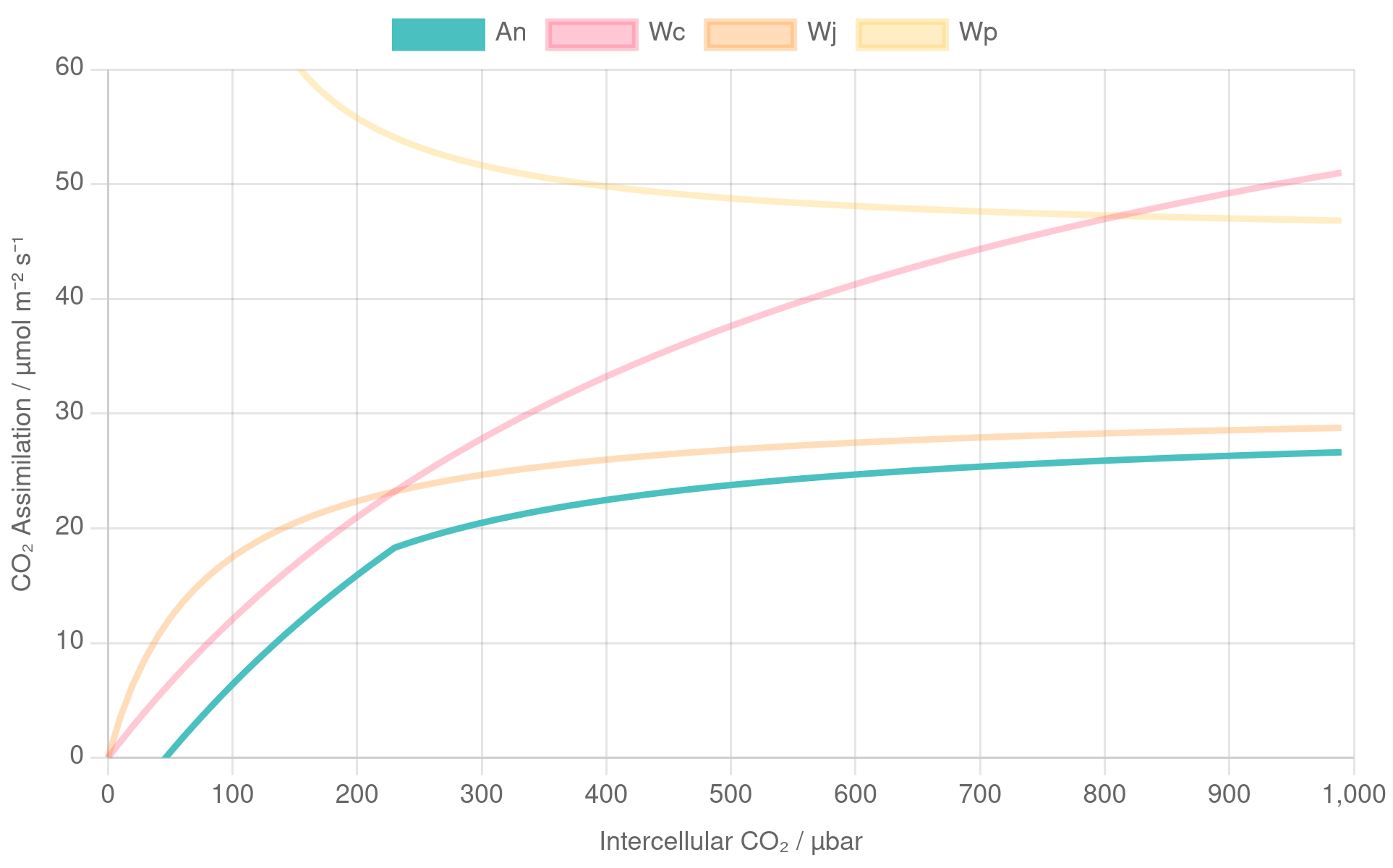
FvCB model of C3 photosynthesis: net assimilation as the minimum of Rubisco-, electron-transport- and TPU-limited rates.
Electron transport chain model resolving the proton motive force into its electric and pH components.
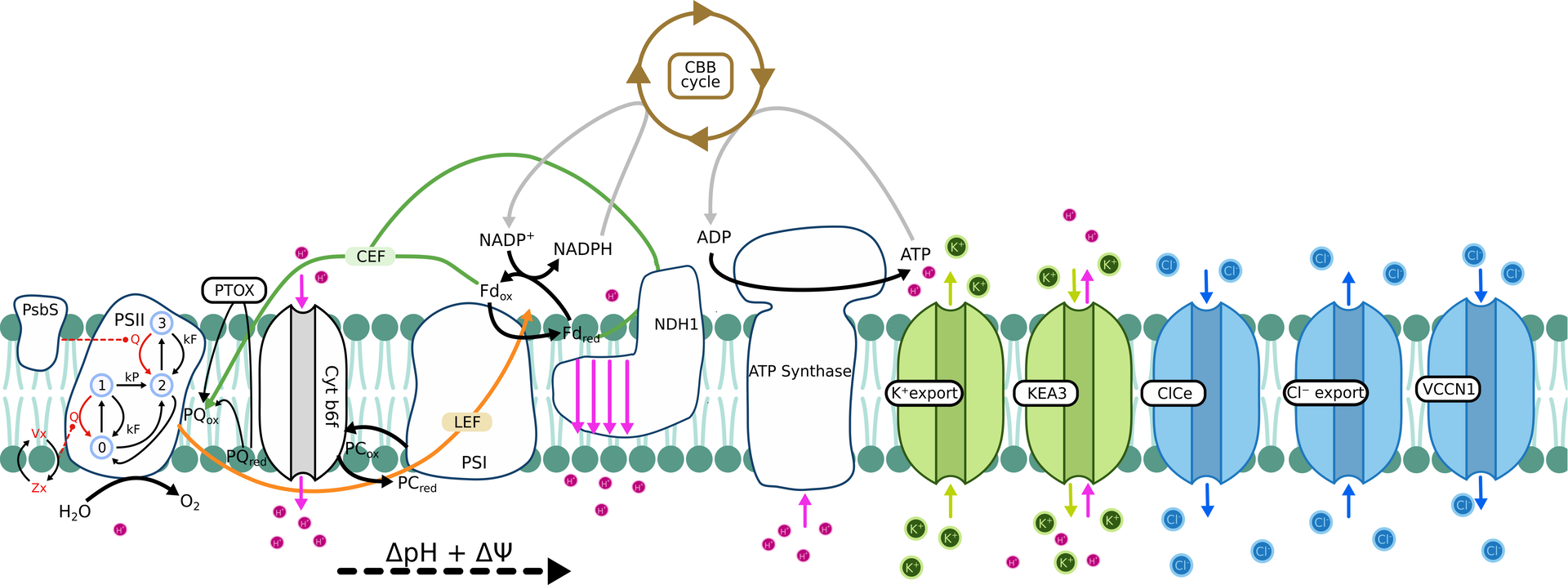
Light-driven model of the thylakoid membrane with cyclic electron flow and photoprotection.
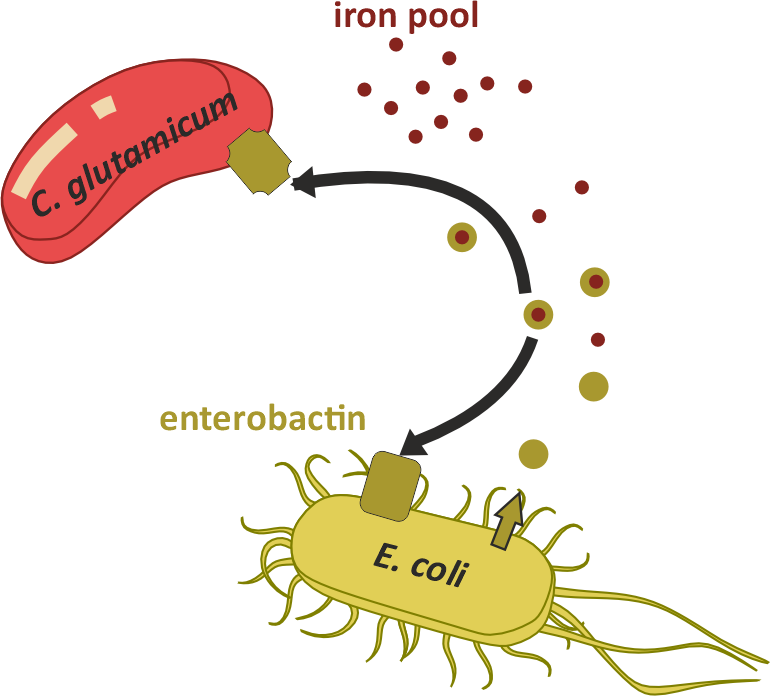
Siderophore-mediated cross-feeding between E. coli and C. glutamicum under iron limitation.

Photosynthetic electron transport model with PSII, PSI and non-photochemical quenching.
The classic model of C3 photosynthesis: net assimilation as the minimum of Rubisco-, electron-transport- and TPU-limited rates.
Comprehensive model of C3 leaf carbon metabolism combining the Calvin cycle with photorespiration.
FvCB model of C3 photosynthesis: net assimilation as the minimum of Rubisco-, electron-transport- and TPU-limited rates.
Model of chlorophyll a fluorescence induction and how herbicides alter it, built on fifteen PSII states.
Kinetic model of thylakoid ion fluxes and their effect on the proton motive force, built on Davis 2017.
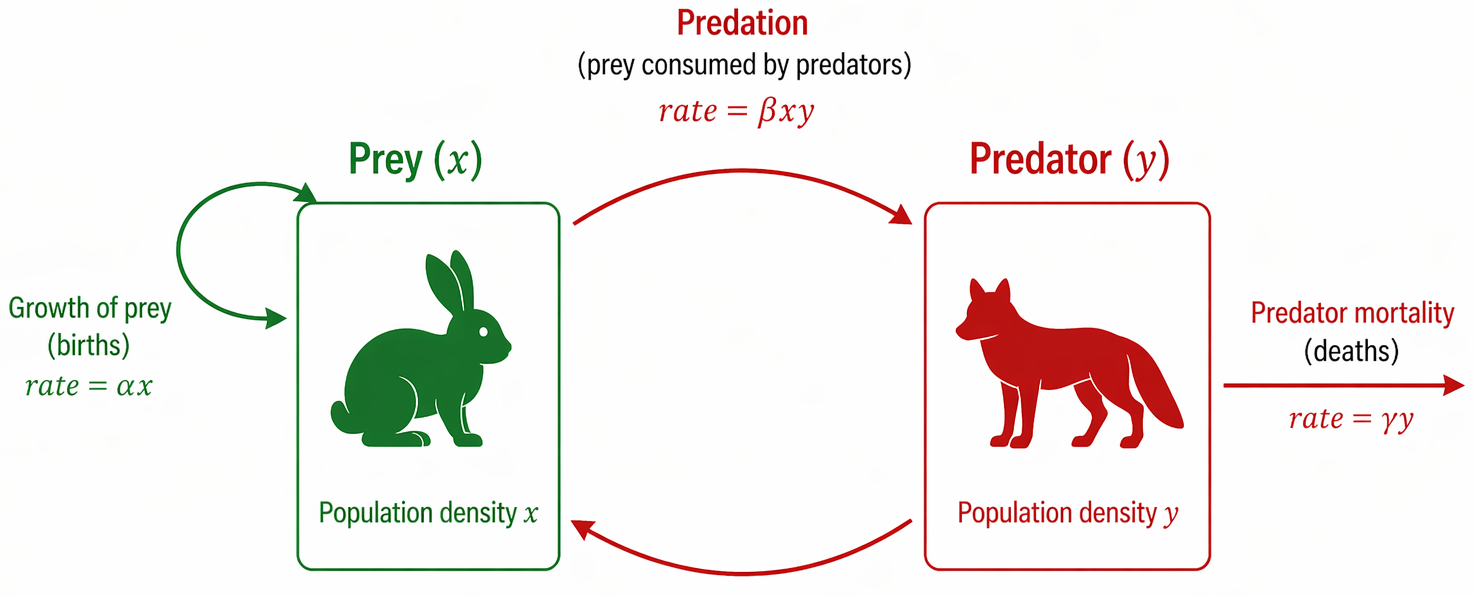
Classical predator-prey model of two species with exponential prey growth, predator death and predation.
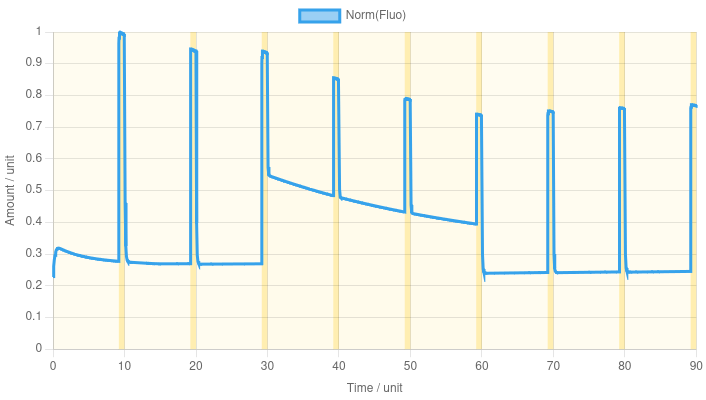
Non-photochemical quenching model of photoprotection in PSII, reproducing PAM fluorescence quenching.
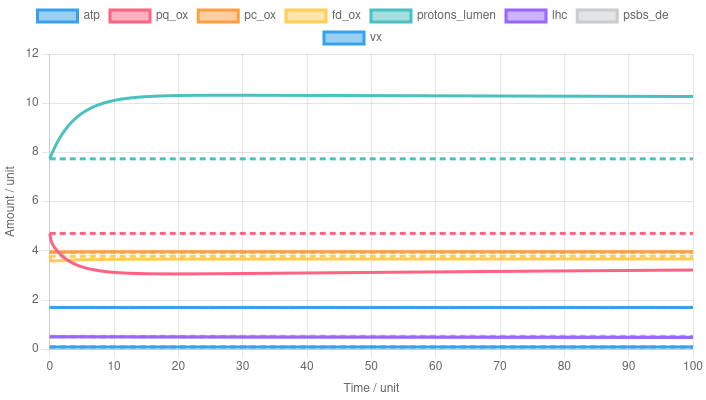
Extension of the NPQ model with PSI electron transport and explicit lumenal pH dynamics.
Supply–demand model coupling the photosynthetic electron transport chain to the Calvin–Benson cycle.
Kinetic model of the Calvin–Benson cycle in C3 chloroplasts, with Rubisco carboxylase and oxygenase competing for RuBP.
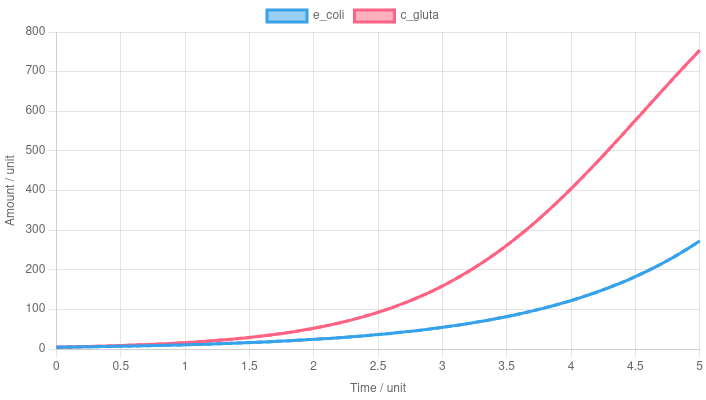
Two-species competition of E. coli and C. glutamicum with Monod-type growth and density-dependent death.
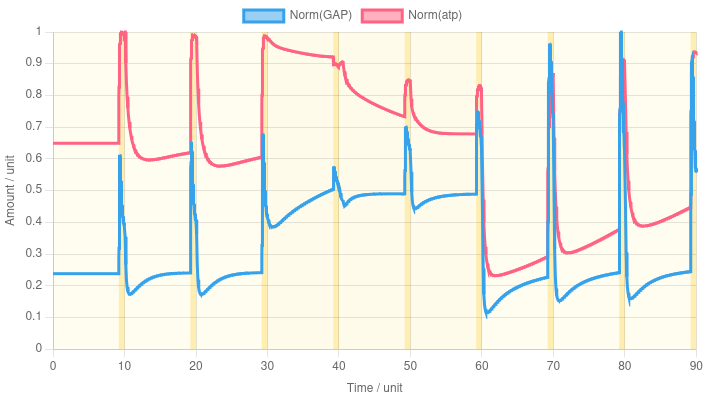
Linear electron flow through photosystem I, including the Mehler reaction.
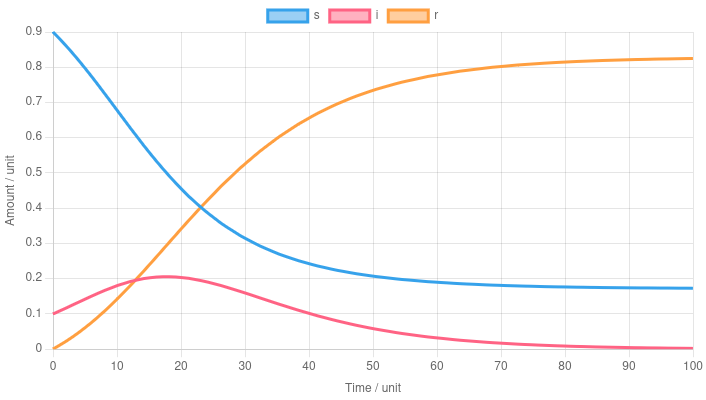
Classic compartmental model of infectious-disease spread with susceptible, infected and recovered groups.
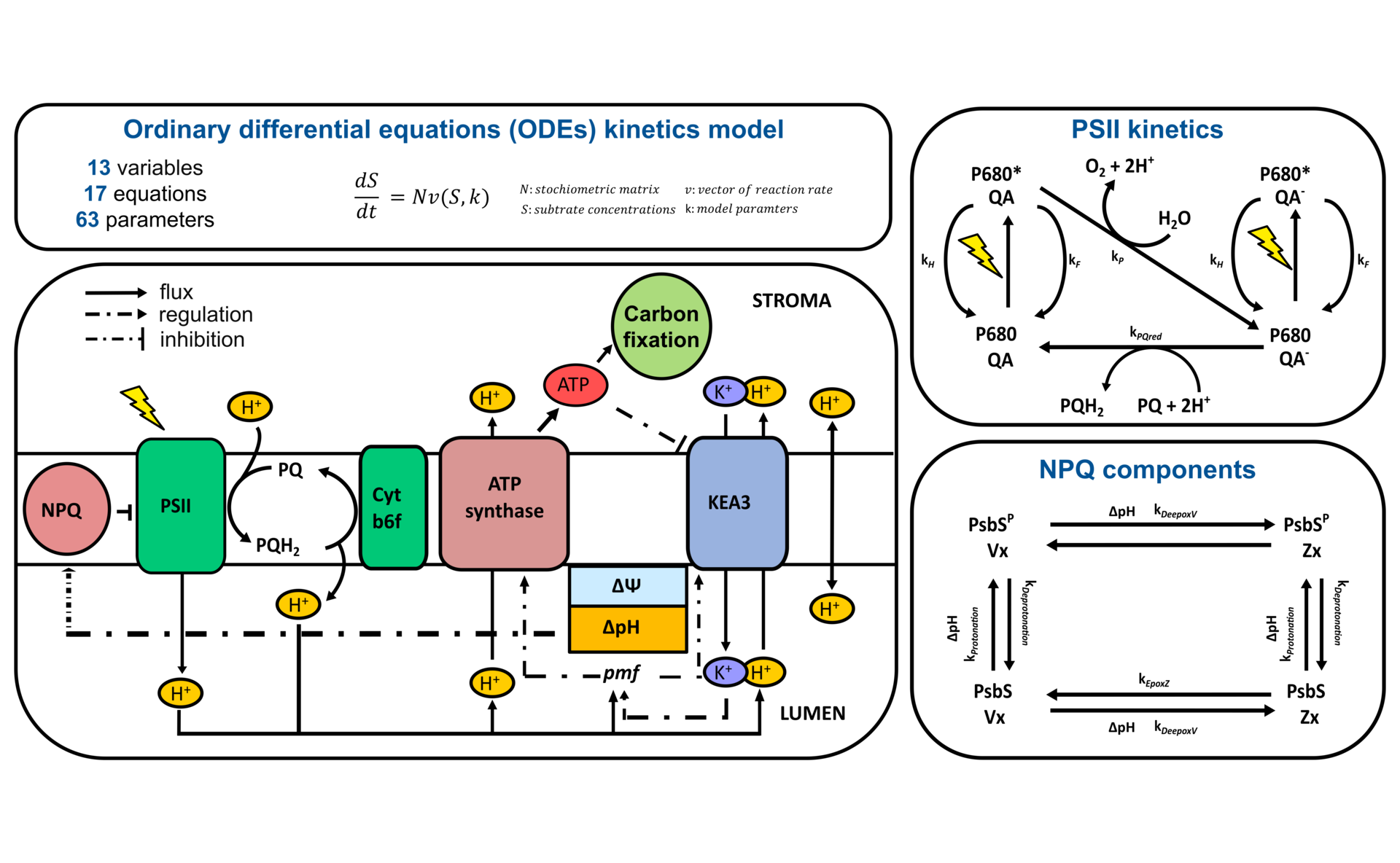
Non-photochemical quenching model adapted for tomato, showing how the KEA3 antiporter shapes photoprotection kinetics.
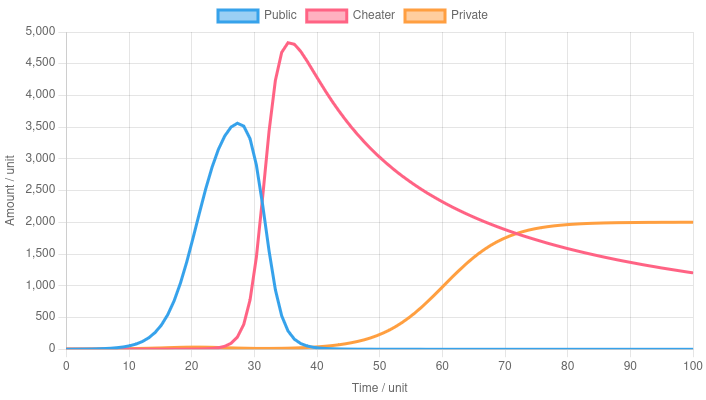
Generalized Lotka-Volterra model of a public metabolizer, a cheater and a private metabolizer competing for sucrose.
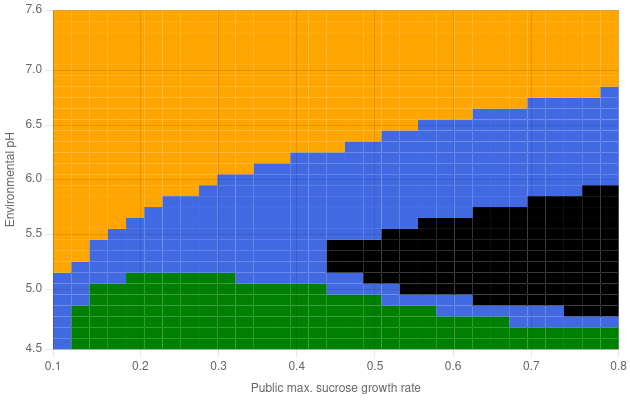
Unpublished extension of the tripartite model with Monod kinetics on explicit sucrose and glucose pools and pH-dependent growth.
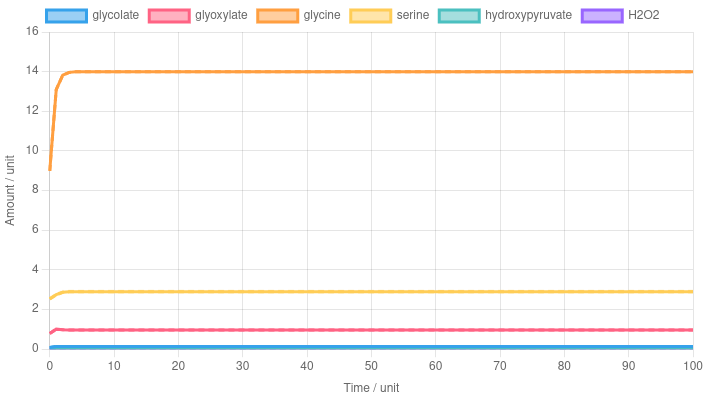
Kinetic model of the photorespiratory C2 cycle, from glycolate to hydroxypyruvate with H₂O₂ scavenging.
Deliberately simplified five-metabolite model of the Calvin–Benson–Bassham cycle.